Skip to content
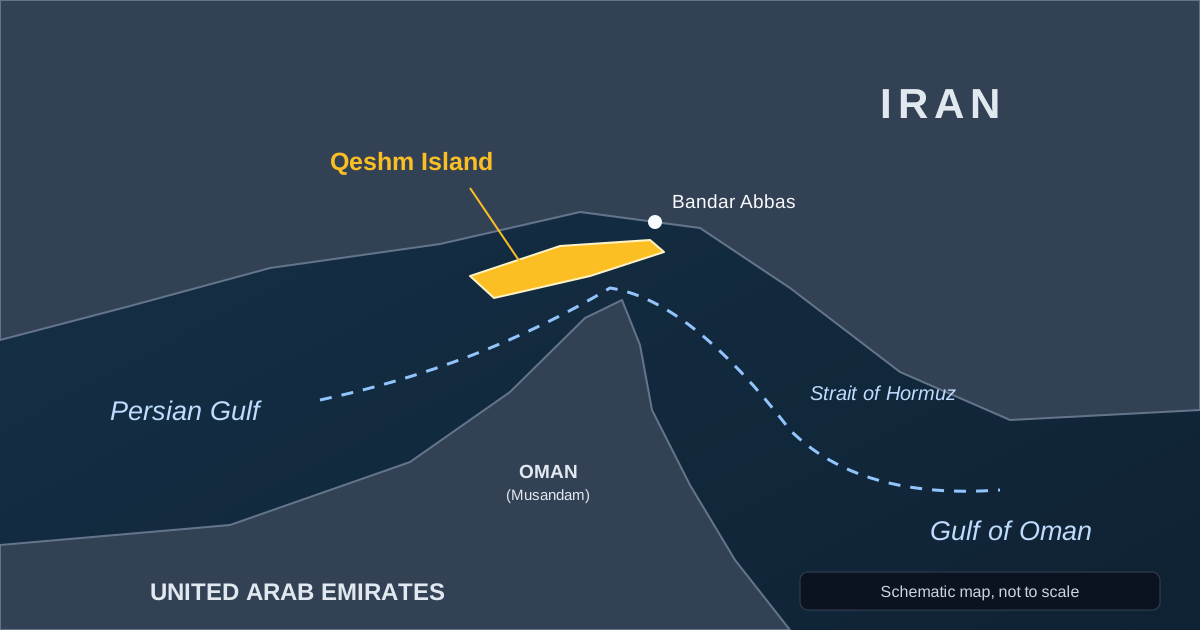
Schematic map of the Strait of Hormuz showing Qeshm Island off the Iranian coast near Bandar Abbas, between the Persian Gulf and the Gulf of Oman
|7 min read

Did Trump Strike Iran Again? What We Know About the Qeshm Island Strikes

Yes. U.S. forces hit targets on Iran's Qeshm Island in the Strait of Hormuz on Nov. 2, 2026, the eve of the midterms. What officials said and what's next.

Did Trump Strike Iran Again?

Yes. On Monday, November 2, the eve of the midterm elections, U.S. forces carried out limited strikes on Iran's Qeshm Island in the Strait of Hormuz, according to U.S. officials who spoke anonymously to NBC News and the Associated Press. They described the strikes as defensive, a response to Iranian fire at U.S. aircraft, and said they were not a return to major combat operations. Trump later described them as "minor, it wasn't war," according to Al Jazeera. Iranian state media reported five explosions on the island. AP says the U.S. was last known to have attacked Iran in early September, although an official told ABC News these were the latest of several limited strikes in recent weeks. They came after Trump had said the U.S. would not launch new strikes before Tuesday's vote. Talks mediated by Qatar continue, and as of Tuesday morning neither side had announced a deal. For the start of this war, see our breakdown of the February 28 strikes and Operation Epic Fury.

What Officials Say Happened

Details come mostly from anonymous officials, and their accounts differ a little from one another and from the president's. - NBC News: Two officials said the strikes were limited. One said the aim was a launcher after Iran again tried to target a U.S. aircraft, calling it part of ongoing operations and saying the U.S. occasionally strikes launchers in self-defense. A third said, "This was a defensive measure for Iranians using surface-to-air missiles against U.S. assets." - Fox News: An official said the strike responded to Iran firing at a U.S. aircraft that evening and does not signal a return to U.S. strikes or an escalation. - Iran's IRNA news agency: Five explosions in succession on the island, with residents reporting two aircraft overhead. - Trump: Al Jazeera reports he said the U.S. had been watching an Iranian anti-aircraft facility for two months, and "as soon as it was completed, we hit it last night very nicely." The last account matters because it suggests planning over time, while the officials' version emphasizes an immediate response. The two are not necessarily in conflict, since a known site could be hit once it fires, but readers should note the difference. Officials told NBC that Iran's Revolutionary Guard has repeatedly fired on U.S. manned and unmanned aircraft over the strait in recent weeks. Fox News notes that Qeshm hosts an underground missile site, a naval base and a major desalination plant. As of Tuesday morning we had not seen an on-the-record Pentagon account or any casualty figures.

What Trump Said Before and After

Monday's statements are worth reading in order, because the strikes came that same evening. Before the strikes: Trump had said the U.S. would not strike Iran before the midterms, AP reports. Earlier Monday, Truth Social: "Iran wants a settlement, as soon as possible." Afternoon, Washington: At his Lincoln Memorial Reflecting Pool speech, he said, "I don't know if you even call it a war, because we haven't been doing any fighting for months." He also pointed to falling oil prices. Afternoon, Axios: He said there was "no rush" on renewed strikes, adding, "One way or the other, we will do something." Evening, Fox News: On Hannity he called this "a very soft war" and said the U.S. "might have to go after" a facility under Pickaxe Mountain, near Natanz. After the strikes: He called them "minor, it wasn't war." Trump spent Monday in Washington, where the Reflecting Pool was his one public appearance. Our final campaign stops report lists his movements through the week. His Reflecting Pool event has its own story, and the location history timeline holds the record for each day.

How the War Reached This Point

The conflict is now about eight months old, and the Strait of Hormuz has been at the center of it almost from the beginning. This is a condensed timeline, drawn from AP reporting and Wikipedia's chronology of the campaign. February 28: The U.S. and Israel launch airstrikes on Iran. Iran closes the strait to foreign shipping. April 8: A ceasefire is declared, although attacks on ships continue. April 13: After talks in Islamabad fail, a U.S. naval blockade of Iran takes effect. June 17: The two sides sign a memorandum of understanding meant to end the war. July 8: The interim deal collapses after attacks on commercial ships. The U.S. and Iran trade strikes. July 14: The U.S. reinstates the blockade. Early September: The last known U.S. attacks before this week, according to AP, though an official told ABC News there have been other limited strikes in recent weeks. October: The most attacks on commercial ships in the strait since March, AP reports. November 2: The Qeshm Island strikes. Thousands of U.S. troops remain off Iran to enforce the blockade, and a third aircraft carrier is heading to the region.

Where the Talks Stand

Diplomacy and force are running at the same time. Qatari mediators held two rounds of talks with Iranian officials last week, and more are planned this week, AP reports. The framework under discussion would have Iran stop attacks in the strait in exchange for the U.S. lifting its blockade of Iranian ports. Fox News reports that Iranian negotiators left Doha on Sunday and that a Qatari proposal calls for three days of confidence-building measures before direct talks. Vice President Vance sent a letter last week to Iran's security chief, Mohsen Rezaei. Trump said it focused on aid such as "medical supplies and various things." Vance said Monday there had been "a number of good conversations with the Iranians." Rezaei first told state TV that "the tone has completely changed." He has since said the U.S. must "fully and explicitly" address Tehran's seven conditions before the strait fully reopens, according to Al Jazeera. On Tuesday, parliament speaker and top negotiator Mohammad Bagher Ghalibaf said, "The ball is now in America's court to prevent war." AP reports that oil prices fell sharply on Monday as talks appeared to progress. If a deal does come, whether Congress gets a vote may depend on its form, a question our guide to treaties and executive agreements covers.

What Could Come Next

The most direct pressure for escalation comes from Israel. AP reports that Prime Minister Benjamin Netanyahu pressed Trump on a weekend call for a quick but extensive air campaign after the U.S. elections, and that Trump would not commit. Fox News, citing other reporting, says Vance and envoy Steve Witkoff favor diplomacy while Netanyahu and Defense Secretary Pete Hegseth favor renewed strikes, and that CIA Director John Ratcliffe has reportedly advised a "no war, no deal" approach. Those are secondhand descriptions of an internal debate, not on-the-record statements. Iran has signaled its own readiness. New Supreme Leader Ayatollah Mojtaba Khamenei said any threat should draw an immediate response without "geographic limits," AP reports. Gulf governments are worried. UAE adviser Anwar Gargash warned at a Bahrain security summit that if the gap cannot be bridged, "we have to worry about the worst," and Egypt's foreign minister said a further escalation "will be more dangerous, more destructive, and it will lead to nowhere." CBS News notes Trump has floated resuming hostilities after the midterms, which makes the coming days a test of both tracks.

Why It Matters to the Midterms

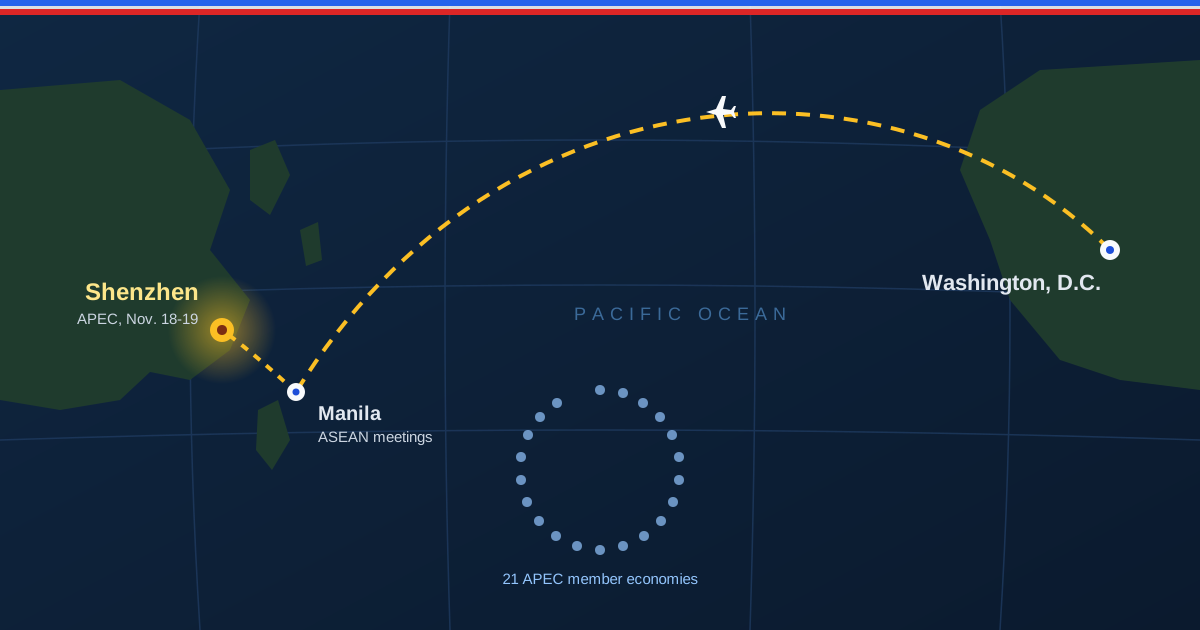
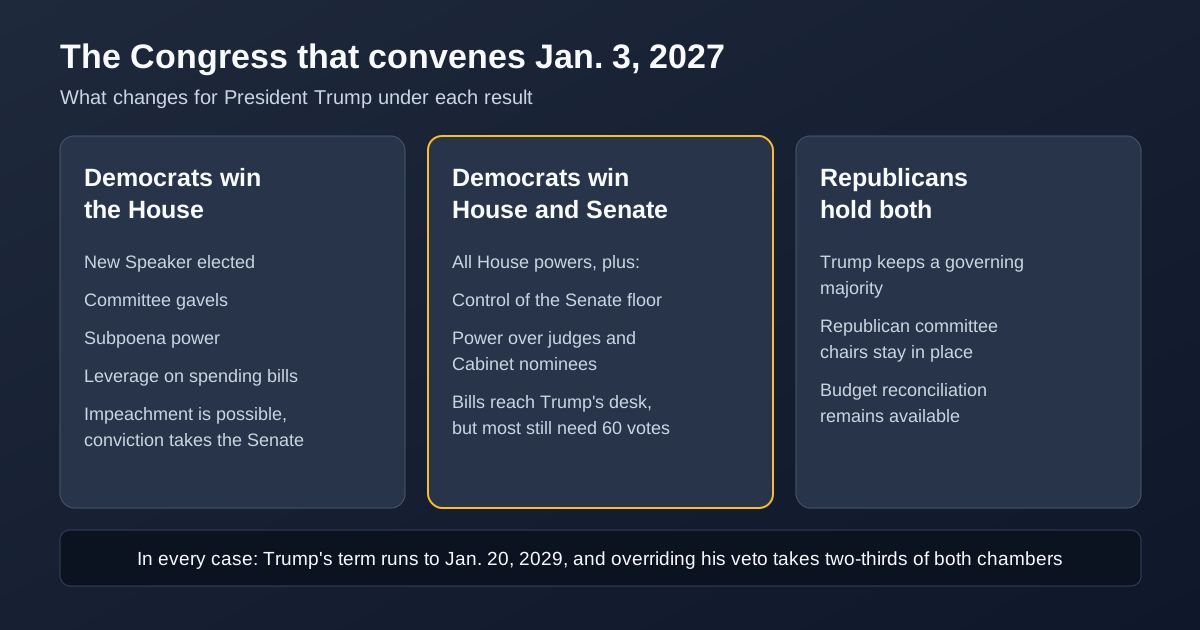
The war has become a political weight for Republicans. AP reports that it has cost taxpayers at least $47 billion and that its effect on gasoline prices is a vulnerability. Polling averages reported by The Conversation on November 2 showed 35.9% support and 56.5% opposition, and an AP-NORC poll cited by Time found 28% approving of Trump's handling of it. See our approval rating breakdown for how those numbers fit into his overall standing. The election could change who oversees the war. Democrats say they would keep holding votes against it, and the top Democrat on House Foreign Affairs plans to investigate Trump's dealings around it. A president can veto such measures, though, so our guide to what happens if Democrats win explains why a change in Congress does not end a war by itself. Trump's next foreign trip, expected later this month, is covered in our APEC 2026 preview.

Frequently Asked Questions

Did Trump strike Iran last night? The U.S. struck Qeshm Island on Monday, November 2, according to U.S. officials, and Trump has since described the strikes as "minor." Why did the U.S. strike Qeshm Island? Officials say it was defensive, after Iran fired on U.S. aircraft. Trump said the U.S. had been watching an anti-aircraft facility there. Is the U.S. back at war with Iran? Officials said this was not a return to major combat operations. The blockade remains in place, and talks continue. What is Pickaxe Mountain? It is a site near Natanz linked to Iran's nuclear program. Trump told Fox News the U.S. "might have to go after" a facility there. Where is Qeshm Island? It lies in the Strait of Hormuz, just off the Iranian coast near Bandar Abbas.

Sources

did Trump strike Iran againdid Trump strike Iran last nightdid Trump strike Iran yesterdayStrait of Hormuz strikes todayQeshm Island strikeUS strikes Iran November 2026Pickaxe Mountain TrumpIran war midtermsUS Iran talks Qatar DohaVance letter Rezaei
LT

LocateTrump Research Team

An independent team of developers, data analysts, and researchers tracking presidential location and activity using publicly available information from 10+ major news sources. Operating continuously since January 20, 2025. All content follows our editorial standards for source verification and accuracy.

Related Articles
Further Reading

Need deeper document-level context? Continue with carefully sourced long-form coverage.

Research Pathways for This Topic

Use these targeted internal paths to move from this article into related hubs, timelines, and data-backed tracking pages.

Explore LocateTrump

See presidential location data in action with our live tools.