Skip to content
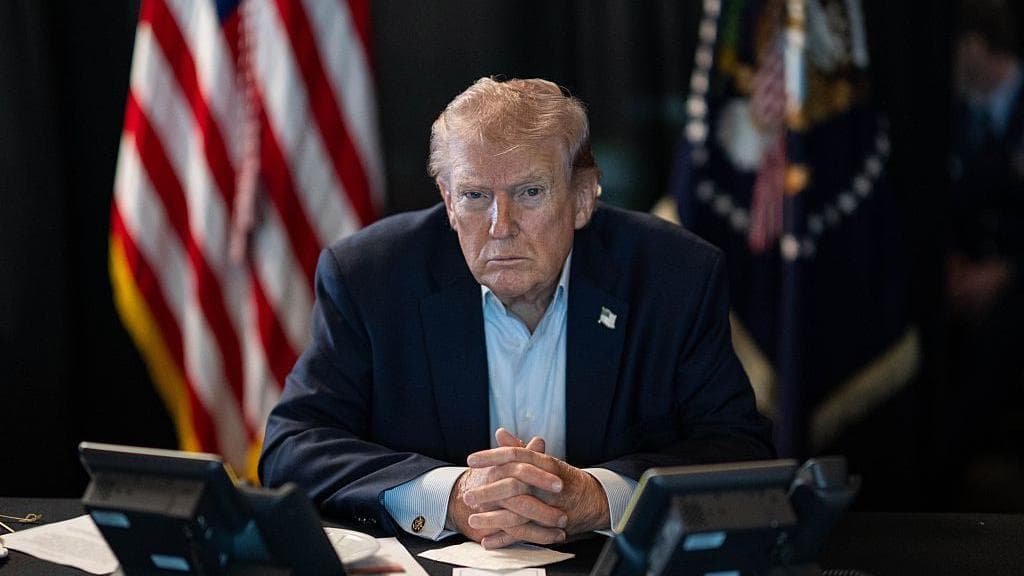
President Trump seated at a command table flanked by US and presidential flags during the Iran military operation briefing
|12 min read

Did Trump Bomb Iran Today? Operation Epic Fury Full Breakdown

Did Trump bomb Iran today? Yes — on February 28, 2026, the US and Israel launched Operation Epic Fury, killing Supreme Leader Khamenei and 40 senior officials. Full breakdown, timeline, and sources.

Quick Summary

Did Trump bomb Iran today? Yes — on February 28, 2026, President Donald Trump authorized a coordinated joint military strike alongside Israel, codenamed Operation Epic Fury (US) and Operation Roaring Lion (Israel), targeting Iranian leadership, nuclear facilities, missile infrastructure, and command-and-control systems across 24 of Iran's 31 provinces. The operation killed Supreme Leader Ayatollah Ali Khamenei and approximately 40 senior Iranian officials, triggering a wave of Iranian retaliatory strikes on US bases and Gulf allies, with Trump stating the campaign would last four to five weeks until all objectives are met.

Did Trump Bomb Iran Today: What Happened on February 28, 2026

The question millions of Americans searched on February 28, 2026 — did Trump bomb Iran today — has a definitive answer: yes. In the early hours of Saturday, February 28, 2026, the United States and Israel launched coordinated military strikes against Iran in what the Pentagon described as the most extensive joint military operation since the Gulf War. The operation caught many off guard despite weeks of tense diplomatic back-and-forth, with the Trump administration indicating as late as February 27 that diplomatic options were still being explored. Trump announced the strikes via Truth Social, declaring that Iran posed a "clear colossal threat" to core American national security interests. The White House released photographs of Trump and senior national security officials in the Situation Room monitoring the operation in real time. The US operation was designated Operation Epic Fury by the Department of Defense. Israel's parallel operation was codenamed Operation Roaring Lion. Both operations were coordinated in advance, with joint targeting packages developed between US Central Command and the Israel Defense Forces in the weeks prior to the strikes. Sources cited by The Washington Post indicate that Saudi Arabia and Israel played key roles in pushing Trump toward authorizing the operation, with Saudi Crown Prince Mohammed bin Salman reportedly signaling no objection to a US strike as long as Iranian retaliatory capability was substantially degraded in the first wave. The strikes began with simultaneous attacks on Iran's air defense networks to suppress anti-aircraft capability before the primary wave of strikes. Within hours, Iranian state media confirmed that multiple explosions had been heard across Tehran, Isfahan, Qom, Karaj, and Kermanshah.

Operation Epic Fury: US Military Objectives and Weapons Used

Secretary of Defense Pete Hegseth outlined four primary military objectives for Operation Epic Fury in a statement released the morning of February 28, 2026. The objectives were: (1) destroy Iranian offensive missiles; (2) destroy Iranian missile production infrastructure; (3) destroy Iran's navy and related security infrastructure; and (4) prevent Iran from obtaining or deploying nuclear weapons. Hegseth described the operation as "the most lethal, most complex, and most-precision aerial operation in history," a characterization that drew both praise from military analysts and skepticism from independent observers who noted the extraordinary scope of the claim. The US employed a diverse weapons package including Tomahawk land attack cruise missiles fired from Navy ships in the Persian Gulf and Red Sea, F-15 and F-35 fighter jets operating from regional air bases, and what NBC News described as the first combat deployment of "suicide" or one-way attack drones — unmanned aerial vehicles packed with explosives that strike a target on a single mission without recovery. Intelligence officials cited by NBC News estimated that the initial US strike package involved hundreds of individual munitions across dozens of target sites. Trump stated on Truth Social that operations would "continue, uninterrupted throughout the week or, as long as necessary," and later set a public expectation of a four-to-five-week campaign timeline — though he added the US had the capability to sustain operations far longer if required.

Operation Roaring Lion: Israel's Role in the Joint Strike

Israel's contribution to the joint operation, designated Operation Roaring Lion, was extensive. The Israel Air Force targeted at least 30 sites in western and central Iran during the opening night of strikes, according to reporting from Al Jazeera. Over the following days, Israel dropped over 1,200 munitions across 24 of Iran's 31 provinces, making it the deepest penetration of Iranian airspace ever conducted by the IDF. Among the most symbolically significant Israeli targets was the compound of Khamenei himself in Tehran, which was completely destroyed. In a particularly dramatic strike documented on the second day of operations, Israel bombed the Assembly of Experts — Iran's body of senior clerics responsible for selecting the Supreme Leader — while it was reportedly in an emergency session to elect Khamenei's successor. The IRGC's Malek-Ashtar building in Tehran, a major defense research and production facility, was also destroyed, with video footage circulated by Iran International confirming total structural collapse. Israeli Defense Minister Israel Katz captured the Israeli government's tone in a statement declaring: "Whoever acted to destroy Israel — was destroyed. Justice has been served." Prime Minister Netanyahu appeared publicly to confirm Israel's participation, framing the operation as a culmination of years of defensive preparations against Iranian proxy networks and nuclear ambitions.

Khamenei and Senior Iranian Officials Killed

The most consequential single outcome of Operation Epic Fury was the confirmed death of Ayatollah Ali Khamenei, Iran's 86-year-old Supreme Leader, who had governed the Islamic Republic since 1989. Iranian state media confirmed his death following Israel's strike on his compound. Iranian President Masoud Pezeshkian formally declared Khamenei a martyr and announced 40 days of national mourning. Trump described Khamenei on Truth Social as "one of the most evil people in History," a characterization that drew sharp criticism from international figures who noted that extrajudicial killing of a sitting head of state raises profound legal questions under international law. In addition to Khamenei, approximately 40 senior Iranian officials were killed in the first 72 hours of the operation, according to multiple sources including CBS News. Among the confirmed dead were: Gen. Abdol Rahim Mousavi, Chief of the Iranian Army Staff; Defense Minister Gen. Aziz Nasirzadeh; Maj. Gen. Mohammad Pakpour, Revolutionary Guard Ground Forces commander; and Ali Shamkhani, who had served as Iran's national security adviser. The decapitation of Iran's senior military and political leadership was central to the operation's strategic design, which officials described as aimed at achieving regime change by eliminating the command structure of the Islamic Revolutionary Guard Corps. A temporary three-member leadership council — including Ayatollah Arafi — was established to assume governmental authority pending a formal succession process.

Nuclear Sites Targeted: What Was Destroyed at Fordow, Natanz, and Isfahan

A central stated objective of the operation was the destruction or severe degradation of Iran's nuclear program. US and Israeli strikes targeted the three primary nuclear enrichment and processing sites: Fordow, which is a hardened underground enrichment facility built inside a mountain; Natanz, Iran's largest enrichment complex; and Isfahan, the site of uranium conversion operations. Trump publicly claimed that the strikes "obliterated" Iran's nuclear program, a characterization that was immediately disputed by arms control analysts and intelligence officials. According to a fact-check published by PBS NewsHour, a White House background document from March 1 described the strikes as having "significantly degraded Iran's nuclear program" — notably stopping short of Trump's use of "obliterated." Multiple experts, including former IAEA inspectors, noted that the deeply buried facilities at Fordow would require sustained bunker-buster attacks over multiple days to guarantee destruction of underground centrifuge halls. The International Atomic Energy Agency called a special board meeting for Monday, March 2, to assess the situation, but noted it was unable to access bombed sites to conduct independent verification — leaving the actual extent of nuclear facility damage unconfirmed by any neutral international body as of early March 2026. The Defense Intelligence Agency had assessed in May 2025 that Iran could develop long-range ballistic missiles capable of reaching the continental United States by approximately 2035 — contradicting Trump's claim of an imminent threat that reportedly justified the timing of the operation, according to the PBS fact-check and multiple intelligence officials cited anonymously by the New York Times, CNN, and Reuters.

Death Toll and Casualties by Country

The human cost of the opening days of the US-Israel campaign on Iran and the subsequent Iranian retaliatory strikes was severe across the region. The following casualty figures were compiled by Al Jazeera's death toll tracker as of March 2, 2026: **Iran:** 787 killed, hundreds injured. The deadliest single incident occurred in Minab, southeastern Iran, where a strike on an elementary girls' school killed approximately 180 children — an incident condemned by humanitarian organizations worldwide and cited by Iran's UN Ambassador as evidence of war crimes. **Israel:** 11 killed, hundreds injured. A Sunday morning Iranian ballistic missile strike on the city of Beit Shemesh killed 9 people. A woman was killed in Tel Aviv on Saturday from falling shrapnel. At least 40 buildings across Tel Aviv were damaged. **United States:** 6 military personnel killed, 18 injured. Four were killed in an Iranian missile strike on a US base in Kuwait. Three F-15 fighter jets were lost — two to Iranian surface-to-air missiles and one in a friendly fire incident with Kuwaiti forces. **Lebanon:** 40 killed, 246 injured from Israeli strikes on Hezbollah-linked targets conducted in parallel with the Iran operation. **UAE:** 3 killed, 68 injured from Iranian drone and missile attacks. **Kuwait:** 3 killed, 35 injured. **Bahrain:** 1 killed, 4 injured. **Iraq:** 2 killed, 5 injured. **Qatar:** 16 injured, 0 killed. **Jordan, Oman:** Minor casualties from missile fragments and debris. Iran's Red Crescent reported 747 additional injured inside Iran, with the full casualty picture still developing as strikes continued into the first week of March. Nine Pakistanis were killed at the US Consulate in Karachi during protests against the operation, according to CBS News.

Iran's Retaliation: Missiles, Drones, and Gulf Attacks

Iran's response to the US-Israeli strikes was rapid and multi-directional. Within hours of the initial attacks, the Islamic Revolutionary Guard Corps launched what it described as the first of what would ultimately become six waves of counterstrikes. Iran fired 137 ballistic missiles and 209 drones at targets across the Gulf region, including US military installations in the UAE, Kuwait, Qatar, and Bahrain, according to reporting from CBS News. The IRGC claimed to have attacked 27 US military locations in the Middle East plus Israeli military facilities. Iran simultaneously threatened to close the Strait of Hormuz — a chokepoint through which approximately 20 percent of global oil supply passes — triggering oil market alarm. Hundreds of vessels anchored in the Gulf as shipping companies assessed risk. Surviving Iranian military commanders, speaking through state media, issued warnings of escalating reprisals. Iranian Parliament Speaker Mohammad Bagher Qalibaf declared: "We will strike you with such painful blows that you will beg for mercy." President Pezeshkian warned that the operation "will create a new chapter in the history of the Islamic and Shia world." Trump responded on Truth Social with characteristic bluntness: "THEY BETTER NOT DO THAT, HOWEVER, BECAUSE IF THEY DO, WE WILL HIT THEM WITH A FORCE THAT HAS NEVER BEEN SEEN BEFORE!" Law enforcement agencies across the United States elevated threat assessments for potential retaliatory attacks on American soil, according to CBS News.

Trump's Justification and the Fact-Check Record

Trump offered his first extended public justification for the operation via Truth Social on February 28, 2026, describing Iran as posing a threat to "core national security interests of the US." He subsequently argued that Iran was "building nuclear weapons" capable of "soon" reaching the United States, that Iran had "rejected every opportunity to renounce their nuclear ambitions," and that its ballistic missile program represented a "growing" and imminent threat to US forces in Europe and overseas. Independent fact-checkers and intelligence analysts challenged several of these claims. The Defense Intelligence Agency's classified assessment from May 2025, cited by PBS NewsHour, determined that Iran could develop missiles capable of reaching the continental US by approximately 2035 — meaning the threat was roughly a decade away rather than imminent. Multiple unnamed US intelligence officials told the New York Times, CNN, and Reuters that Trump "exaggerated the immediacy of the threat." On the nuclear damage question, a White House background document acknowledged only "significant degradation" of Iran's nuclear program, contradicting Trump's public use of "obliterated." Trump did not seek congressional authorization before launching the strikes. Democrats, including former Vice President Kamala Harris and Rep. Seth Moulton, argued this constituted an unconstitutional act of war. The administration asserted the president's inherent Article II authority as commander in chief was sufficient legal justification. Republicans in Congress largely supported the operation, with Sen. Tom Cotton calling it "necessary" after "47 years of Iran waging war" against the United States.

What Trump Said: Key Quotes From the Operation

Trump's public communications during the first days of the Iran operation were conducted primarily through Truth Social and brief statements to reporters, consistent with his communication pattern across his second term. Several statements stood out for their scope or inflammatory character: On Khamenei's death: "One of the most evil people in History has been eliminated. The world is a safer place today." — Truth Social, February 28, 2026 On the operation's scope: "Operations will continue, uninterrupted throughout the week or, as long as necessary." — Truth Social, February 28, 2026 On Iran's threat level: "Iran's conventional ballistic missile program was growing rapidly and posed a very clear colossal threat to America." — Statement to reporters, March 2, 2026 On the timeline: Trump stated he expected the campaign to last "four to five weeks" but retained flexibility. Sources cited by Al Jazeera indicated the administration was planning for a sustained multi-week air campaign focused on systematically degrading Iranian military capability layer by layer. On deterrence: "THEY BETTER NOT DO THAT, HOWEVER, BECAUSE IF THEY DO, WE WILL HIT THEM WITH A FORCE THAT HAS NEVER BEEN SEEN BEFORE!" — Truth Social response to Iranian retaliation threats On the broader mission: Administration officials, speaking on background to NPR, described the operation's ultimate goal as achieving regime change in Iran — a scope significantly broader than the four tactical objectives outlined by Secretary Hegseth.

Congressional Reaction: Support, Opposition, and the War Powers Debate

The Trump administration's decision to attack Iran without seeking congressional authorization became one of the defining political flashpoints of the operation. The War Powers Resolution of 1973 requires the president to notify Congress within 48 hours of committing US forces to armed conflict and limits unauthorized combat to 60 days without congressional approval. Trump's critics argued the strikes violated both the spirit and letter of the War Powers Resolution; the administration countered that the president's Article II commander-in-chief authority provided independent legal justification. Congressional reactions fell largely along partisan lines, though with some notable exceptions. Republican supporters included Sen. Tom Cotton (R-AR), who called the strikes "necessary after 47 years of Iran waging war against the United States and our allies," and Nikki Haley, who praised the administration's "decisiveness." Opposition was more vocal from Democrats. Former Vice President Kamala Harris said Trump was "dragging the United States into a war the American people do not want." Rep. Seth Moulton (D-MA), an Iraq War veteran, stated bluntly: "He has started a war without congressional approval." Moderate Republicans and some libertarian-leaning members of the House expressed concern about the precedent set by executive unilateral action on a conflict of this scale. Multiple members of both chambers introduced or signaled plans to introduce War Powers Resolutions seeking to compel a withdrawal of forces if Congress did not formally authorize the conflict. The International Atomic Energy Agency called an emergency board meeting. The United Nations Security Council convened an emergency session, where Iran's UN Ambassador described the strikes as "a war crime and crime against humanity."

International Response: Supporters, Critics, and Regional Impact

International reaction to the US-Israel strikes on Iran split sharply along existing geopolitical fault lines. Among those who publicly expressed support or restrained criticism were Saudi Arabia, which — according to The Washington Post — had privately signaled to the Trump administration that it would not oppose the operation as long as Iranian retaliatory capability was suppressed in the opening phase; the United Arab Emirates, which had normalized relations with Israel under the Abraham Accords; and Reza Pahlavi, the exiled Iranian crown prince, who praised the operation and expressed hope that it would lead to a democratic transition in Iran. Scenes of Iranians celebrating in Los Angeles — home to one of the world's largest Iranian diaspora communities, often called "Tehrangeles" — were broadcast globally and cited by administration supporters as evidence that many Iranians welcomed the destruction of the Islamic Republic's leadership structure. Critics included virtually every major European ally, the United Nations Secretary-General, Russia, China, and most of the Global South. Iran's UN Ambassador formally charged the US and Israel with war crimes before the Security Council. Russia and China vetoed a Security Council resolution that would have condemned the strikes. The UN Secretary-General called for an immediate ceasefire and the opening of diplomatic channels. The IAEA held its special meeting on Monday, March 2, with member states divided over how to respond. The State Department issued a worldwide caution advisory urging American citizens in the region to depart or take shelter. Pakistan reported 9 people killed at the US Consulate in Karachi during violent anti-US protests triggered by the operation.

What Reddit and Social Media Said: Public Reaction

The question "did Trump bomb Iran today" became one of the most searched phrases in the United States and globally within hours of the first strikes on February 28, 2026. On Reddit, the story dominated r/worldnews, r/politics, r/news, and r/geopolitics for days, with multiple threads accumulating tens of thousands of comments and hundreds of thousands of upvotes. The top threads on r/worldnews covering the initial strike announcement reportedly drew among the highest engagement of any geopolitical news event in the subreddit's recent history, with users in the United States, Europe, the Middle East, and Iranian diaspora communities sharing live updates, firsthand accounts, satellite imagery, and political reaction. The public reaction online was sharply divided. A significant segment of American social media users expressed support for the operation, echoing administration messaging about Iranian nuclear ambitions and decades of proxy warfare. Counter-commentary raised concerns about the legality of striking a sovereign nation without congressional authorization, the civilian casualty toll (particularly the school strike in Minab), and the risk of the conflict expanding into a wider regional war. Iranian diaspora communities on Reddit and Twitter/X were themselves divided: older generation exiles who had fled the 1979 revolution and subsequent theocratic government expressed relief and hope; younger diaspora members and human rights advocates mourned the civilian casualties and expressed anxiety about the fate of family members inside Iran. Anti-war protests broke out in multiple US cities within 48 hours of the strikes, with demonstrations reported in Washington DC, New York, Los Angeles, Chicago, and San Francisco — events that generated their own extensive social media coverage and debate.

What Happens Next: Trump's Four-to-Five Week Campaign

As of early March 2026, the US-Israeli military campaign against Iran remained ongoing with no ceasefire in sight. Trump publicly stated the operation would last four to five weeks, and the Pentagon confirmed additional US military assets were being repositioned toward the region. The four stated objectives — destroying Iranian offensive missiles, missile production, naval forces, and nuclear capability — represent an extraordinarily broad target set that military analysts widely noted could not be fully achieved in the described timeframe without ground operations, which neither government had announced. Iran's surviving leadership structure — led by a temporary three-member council pending formal succession — had shown no indication of capitulation, with every public statement reaffirming commitment to continue retaliatory strikes and refusing any negotiations until the attacks stopped. The Strait of Hormuz remained under threat of closure, keeping global oil markets in a state of significant disruption. The IAEA remained unable to access nuclear sites to verify actual damage, meaning the nuclear dimension of the conflict remained deeply uncertain. Congressional pressure for a War Powers vote was building, though Republican leadership in both chambers had not committed to scheduling such a vote. The diplomatic pathway — if one existed — remained undefined: the administration had not articulated clear conditions for ending the campaign other than the completion of the four Pentagon objectives, and Iran had issued no public willingness to negotiate under fire. Brookings Institution analysts warned in a March 2026 assessment (Brookings: After the Strike) that even a militarily successful degradation of Iranian capability could produce a prolonged insurgency, proxy escalation through Hezbollah and Houthi networks, and a humanitarian crisis that would destabilize the region for years.
did trump bomb iran todaytrump bomb irandid trump bomb irantrump iran attackoperation epic furyus israel iran strikes 2026iran bombed 2026trump iran warkhamenei killedisrael iran attack february 2026operation roaring lionus iran war 2026
LT

LocateTrump Research Team

An independent team of developers, data analysts, and researchers tracking presidential location and activity using publicly available information from 10+ major news sources. Operating continuously since January 20, 2025. All content follows our editorial standards for source verification and accuracy.

Related Articles
Further Reading

Need deeper document-level context? Continue with carefully sourced long-form coverage.

Research Pathways for This Topic

Use these targeted internal paths to move from this article into related hubs, timelines, and data-backed tracking pages.

Explore LocateTrump

See presidential location data in action with our live tools.